
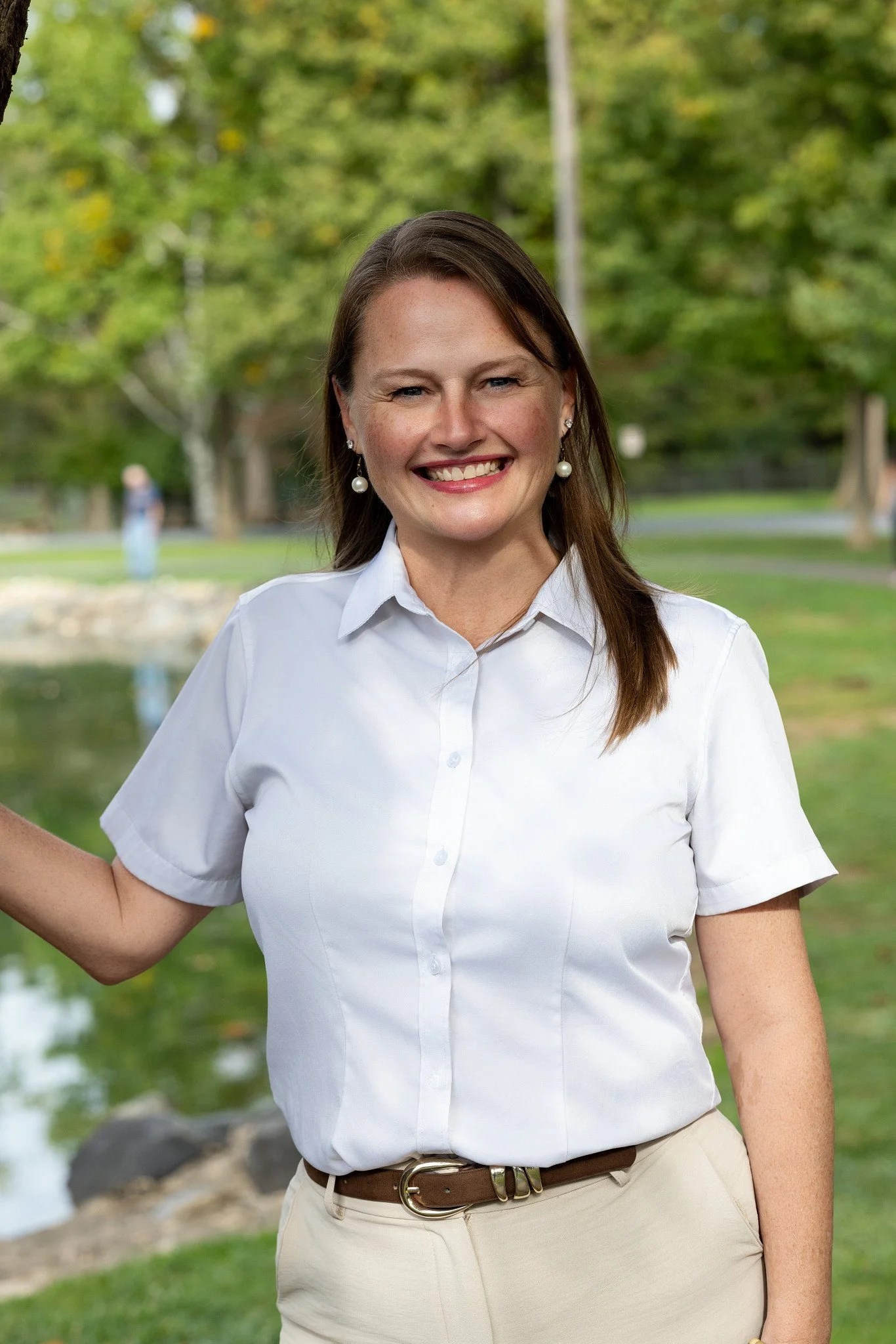
Nikki Rivera Is Still Learning — and She Thinks Harrisburg Should Be, Too
After three decades in a classroom, the Lancaster Democrat traded lesson plans for legislation. Nearly two years into her first term, she talks late budgets, marijuana, electricity costs, taxing wealth — and what Harrisburg has taught her about how government actually works.
There is something distinctly teacher-like about the way Nikki Rivera talks about being a state legislator.
Not preachy. Not professorial. More like somebody who has spent decades believing that when confronted with something she doesn’t understand, the appropriate response is to start asking questions.
“I have been learning everything ever,” Rivera says, laughing.
It may be the simplest description of her first term in Harrisburg.
Rivera, a Democrat representing Pennsylvania’s 96th House District in Lancaster County, entered the legislature for the 2025 session after a career that included 30 years teaching high-school Spanish and years serving on the Manheim Township School Board. Today, she sits on five House committees and serves on the Chesapeake Bay Commission.
The transition has been an immersion course in the peculiar machinery of state government: committees, amendments, appropriations, negotiations, concurrence votes and the thousand procedural details that rarely make campaign literature but determine whether an idea ever becomes law.
“A lot of situations take actually going through them to really learn them,” Rivera says, “rather than just read the manual on how to do things.”
One of those lessons has already ended with a governor’s signature.
Rivera was the prime sponsor of House Bill 923, legislation designed to prevent Social Security cost-of-living increases from inadvertently pushing older Pennsylvanians beyond the income limits for PACE and PACENET prescription-drug assistance. The measure passed the House 203-0, later passed the Senate 46-0 and was signed into law in November 2025 as Act 49.
It is the sort of legislation almost perfectly engineered not to go viral.
There is no culture-war headline attached to it, no cable-news shouting match, no obvious opportunity for political theater. It addresses instead one of government’s less glamorous responsibilities: noticing when two parts of the system collide and create a problem for people who depend on them.
“It keeps them eligible for their benefits,” Rivera says.
For a freshman legislator, seeing a bill travel all the way through that process offered a practical education in how Harrisburg works when Harrisburg actually works.
The other lessons have been about what happens when it doesn’t.
The Waiting Game
Ask Rivera about the frustrations of her first term and she quickly arrives at the state budget.
Pennsylvania’s constitution establishes a fiscal year beginning July 1, but recent budgets have repeatedly arrived after that date. The 2026-27 budget, for example, was not signed until July 12.
For Rivera, whose previous career was spent inside public education, the delay is more than an abstract fight among legislative leaders. School districts and other entities have budgets of their own to build, employees to pay and programs to plan.
“It’s a lot of a guessing game,” she says.
Rivera would like Pennsylvania to push its effective budget deadline earlier — ideally to April 30 or May 30 — so schools and other organizations know what state support they can expect before beginning their own fiscal years.
“I’d rather us be honest with taxpayers and have all the information that we need before making these decisions.”
That impatience with process becomes a recurring theme in Rivera’s politics. Her complaints are less about the existence of disagreement than about the inability of government to resolve disagreements and move.
“Having Pennsylvania legislature get things done efficiently for us is a frustrating aspect to me,” she says.
Nearly two years in, she has also learned that the calendar of politics bears little relationship to the calendar of policy.
“Even though I have a two-year term, nothing is finished in two years,” she says. “My goals are not done in two years.”
Where the Money Goes
One of the places Rivera believes Pennsylvania has unfinished business is revenue.
She supports legalizing recreational marijuana for adults and taxing its sale, arguing that Pennsylvania is losing economic activity to nearby states where adult-use cannabis is legal.
The regional landscape has changed dramatically: New York, New Jersey, Delaware, Maryland and Ohio have legalized adult recreational use, although neighboring West Virginia has not. Pennsylvania continues to operate a medical-marijuana program without a legal adult-use recreational market.
To Rivera, the distinction is increasingly difficult to justify.
“Expanding to 21 and up for recreational is where it needs to be,” she says, comparing legalization and regulation to Pennsylvania’s treatment of alcohol.
Another looming issue sits inside bars, convenience stores and small businesses across the Commonwealth: so-called skill games.
In June 2026, the Pennsylvania Supreme Court ruled that the machines fall within the legal definition of slot machines and therefore cannot operate outside Pennsylvania’s licensed gambling framework. The court stayed its ruling for 120 days; Pennsylvania State Police have said enforcement can begin October 14, 2026.

The dispute has carried substantial tax implications. Rivera argues that rather than leaving the devices outside the regulated system, lawmakers should determine how they should be taxed and regulated.
“There needs to be a tax,” she says.
The broader argument Rivera makes is philosophical as much as fiscal: Pennsylvania, she believes, should look more aggressively at places where revenue can be collected without placing additional pressure on ordinary wage earners.
She mentions digital advertising and efforts to close tax loopholes affecting high earners. Then comes one of those moments when a policy conversation suddenly reveals more about the politician than another dozen talking points could.
Asked about billionaires, Rivera doesn’t hedge.
“Even one is too many,” she says. “There should be a lot of spreading of the wealth when you get to a certain point.”
Then she reaches for a gentler formulation.
Her favorite bumper sticker, she says, reads: “Live simply, so that others can simply live.”
She pauses.
“Not ‘eat the rich,’” she adds with a laugh. “That’s not my favorite one.”
Batteries Included
If Rivera’s first successful law operates in the obscure territory where Social Security increases meet prescription-benefit eligibility, one of her current priorities sits inside another subject most people think about only when something goes wrong: the electric grid.
Rivera is the prime sponsor of House Bill 2380, legislation that would establish a statewide energy-storage program requiring Pennsylvania electric distribution companies to procure large-scale battery-storage capacity. The bill advanced through the House Energy Committee in June and, as of September 30, had reached second consideration before being recommitted to the Appropriations Committee.
The proposal calls for thousands of megawatts of grid-scale storage over the coming decade.
The basic concept is straightforward: electricity can be stored when supply is plentiful or less expensive and deployed later when demand is high. That can reduce stress on the grid and potentially limit exposure to high-cost peak generation.
Rivera explains it less technically.
“It’s like leaving your water faucet on all day long,” she says.
Her conversational shorthand describes electricity as though unused electrons were simply waiting in the wires to be bottled. The physics are more complicated than that, but the policy objective is clear: use battery systems to shift available power across time rather than forcing the grid to match every spike in demand with additional real-time generation.
What is notable is how the proposal reached Rivera’s desk.
She says she encountered the concept while attending an environmental leadership conference in Berkeley, California, then brought it back to Pennsylvania.
“I sent it to the Energy Committee and said, ‘What are we doing with all this?’”
The response, she recalls, was essentially: This could work.
“So we’ve been working on that since December of last year.”
It is perhaps the purest expression of Rivera’s approach to the job: encounter an idea, ask why Pennsylvania isn’t doing it, find the people who understand the machinery and begin pushing.
From the Classroom to the Capitol
Rivera’s legislative identity is difficult to separate from the classroom.
She earned a Spanish degree from the University of Pittsburgh in 1994, received her teaching certification the following year and spent three decades teaching Spanish in the Warwick School District. She also served on the Manheim Township School Board, including multiple terms as its president.
Her former profession continues to surface in her political priorities, particularly education funding and the state budget. But another part of that career has followed her to Harrisburg more literally.
Rivera is bilingual.
“Me gusta mucho hablar español,” she says, slipping effortlessly into the language she taught for decades, “y lo puedo usar muchísimo en este puesto.”
I really like speaking Spanish, and I can use it a lot in this job.
In a district that includes portions of Lancaster city along with parts of Manheim Township and East Petersburg Borough, that ability gives Rivera another way to communicate directly with constituents. The 96th District encompasses a population of more than 63,000 people across three school districts.
But Rivera keeps returning to something less measurable than committee assignments or legislative statistics: accumulated knowledge.
Government, she has discovered, has its own institutional language. Learning it takes time.
That becomes part of her case for wanting another term — not simply that she has unfinished legislation, but that the first two years have been an apprenticeship she wants to build upon.
“Gaining this knowledge and experience is not an overnight thing,” she says. “It’s not a week or a month thing. I’m still learning, and there’s a lot that goes into this.”
There is a revealing absence of grandeur in the way Rivera describes the work.
She doesn’t present Harrisburg as a place where a single heroic politician marches into the Capitol and fixes Pennsylvania. She talks repeatedly about colleagues, committees, competing chambers, negotiations and ideas brought home from other places. Government in Rivera’s telling is frustrating precisely because it is collective.
That may be why the teacher analogy fits.
The job requires preparation. It requires patience. Sometimes the lesson works. Sometimes it doesn’t. Sometimes everybody is still arguing when the bell rings.
And then, the next morning, you come back and try again.